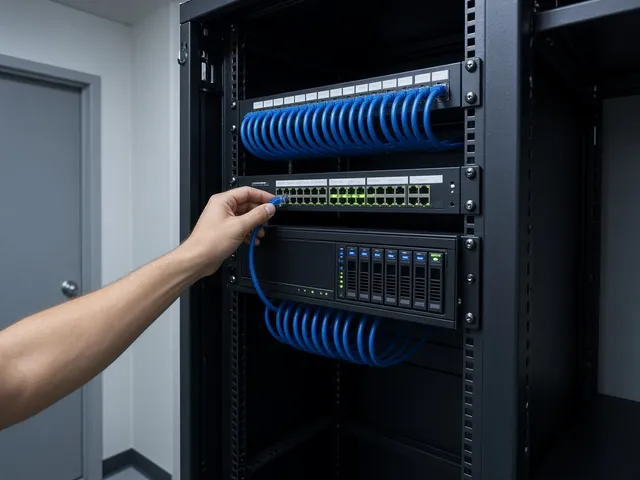
In-house IT
An internal IT person knows your business intimately, is on site and can work on projects as your priorities shift. The challenges are cost (salary, benefits, training and tools), coverage (holidays, sick days, after-hours) and breadth: one person rarely has deep skills in networks, cloud, security and help desk at the same time.
Salary data for IT support roles is published by the U.S. Bureau of Labor Statistics, and the fully loaded cost of an employee is typically well above base salary once benefits, payroll taxes, tools and training are included.
Managed IT
A managed service provider spreads the cost of a team and a professional toolset across many clients. You get help desk, engineers, security monitoring and strategy for a per-user fee. The trade-offs are less on-site presence and the need to manage a vendor relationship well.
Side by side
| In-house | Managed IT | Co-managed | |
|---|---|---|---|
| Cost model | Salary plus overheads | Per user per month | Salary plus reduced MSP fee |
| Coverage | Working hours of one person | Team, optional 24/7 | Both |
| Specialist skills | Limited to the hire | Broad bench | Broad bench |
| On-site presence | High | Scheduled | High |
| Tools | Bought separately | Included | Shared |
The middle path: co-managed IT
Growing businesses often keep an internal IT lead and add an MSP for monitoring, security and overflow. See co-managed IT.
Frequently asked questions
At what size should we hire in-house?
There is no fixed threshold. Businesses often consider an internal hire once they have enough day-to-day work to keep someone fully busy, and many keep an MSP alongside for specialist cover.